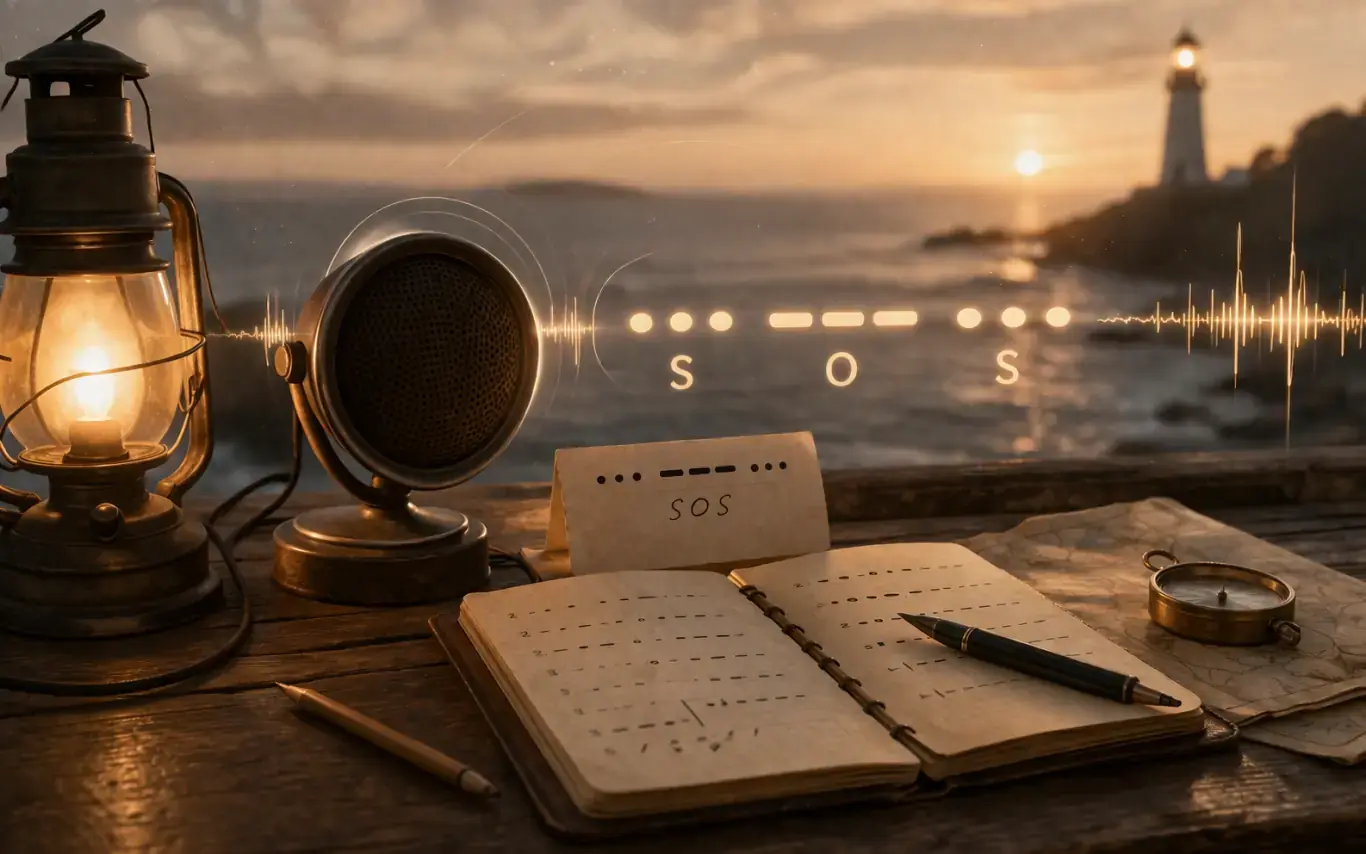
SOS in Morse Code
If you searched for SOS in Morse code or SOS morse code, copy the pattern instantly, compare spacing formats, and send it with sound, tapping, or flashlight timing.
Text
Read-only preset
Morse Code
S = ... • O = --- • S = ...
Letter-by-Letter SOS Morse Breakdown
SOS in morse code is formed by three clear character groups: S (...), O (---), and S (...). Reviewing each block separately helps you recognize and send the pattern with more confidence.
Use the cards below to practice each letter rhythm before sending the full sequence continuously.
Letter Layer
S
...
O
---
S
...
What SOS Means
If you are learning SOS morse code for practice or safety training, it helps to understand both the meaning and the context. SOS is not a word abbreviation in this usage; it is a fixed Morse distress sequence that is kept short and unmistakable.
A Recognized Distress Signal
SOS is widely recognized as a distress signal in International Morse code, represented by three dots, three dashes, and three dots.
Simple and Distinct Pattern
The pattern is easy to remember and stands out clearly, which makes it practical when conditions are noisy, dark, or stressful.
Use Responsibly
Because SOS is an emergency signal, use it for real distress situations or clearly marked practice contexts only.
How to send SOS with sound, tapping, or flashlight
You can send SOS using beeps, tapping patterns, or light pulses. The medium changes, but the sequence stays the same: short-short-short, long-long-long, short-short-short.
For real-world clarity, keep your rhythm steady and your pauses consistent. People are much more likely to recognize SOS quickly when spacing is regular instead of rushed.
Timing and spacing (dot, dash, pauses)
- SOS works because the rhythm is symmetrical: short-short-short, long-long-long, short-short-short.
- Recognition drops fast when the middle long section becomes too short or the pauses between the three groups drift.
- Practice each three-signal block cleanly first, then connect the full pattern without rushing the transitions.
Need the exact unit-based timing rules behind this pattern? Read Learn Morse for the full spacing guide.
Signal clearly, but avoid repeated bright flashes anywhere they could distract traffic, aircraft crews, or people affected by strobing light.
Copyable SOS Morse Code
Recommended format (clear and letter-separated): ... --- ....
Common compact form: ...---....
Spaced vs compact formats
Both forms represent the same SOS signal, but the spaced version is easier for beginners and decoder tools to parse correctly. If you are copying SOS into a translator, training worksheet, or message note, the spaced version usually reduces mistakes and makes letter boundaries clear at a glance.
In short discussions, people often type the compact form quickly. For learning, teaching, and decoding accuracy, use the spaced version as your default.
About SOS: Meaning and History
Core Signal
SOS is globally recognized in Morse communication. The sequence ... --- ... is effective because it is short, distinct, and easy to detect quickly.
Historical Context
A common historical reference is the 1906 International Radiotelegraph Convention in Berlin, where SOS was adopted into broader distress signaling standards.
Practical Check
For real encoding and decoding, use the Morse Code Translator and verify symbols in the Morse Code Alphabet.
References
Try Your Own Message
Want to encode a longer message like "SOS HELP"? Type text or Morse code to preview the result before opening the full translator.
SOS in Morse Code FAQ
SOS in Morse code is "... --- ...": three dots, three dashes, and three dots.
Explore More Morse Code Guides
Looking for a specific phrase or a full reference chart? Start with these pages.
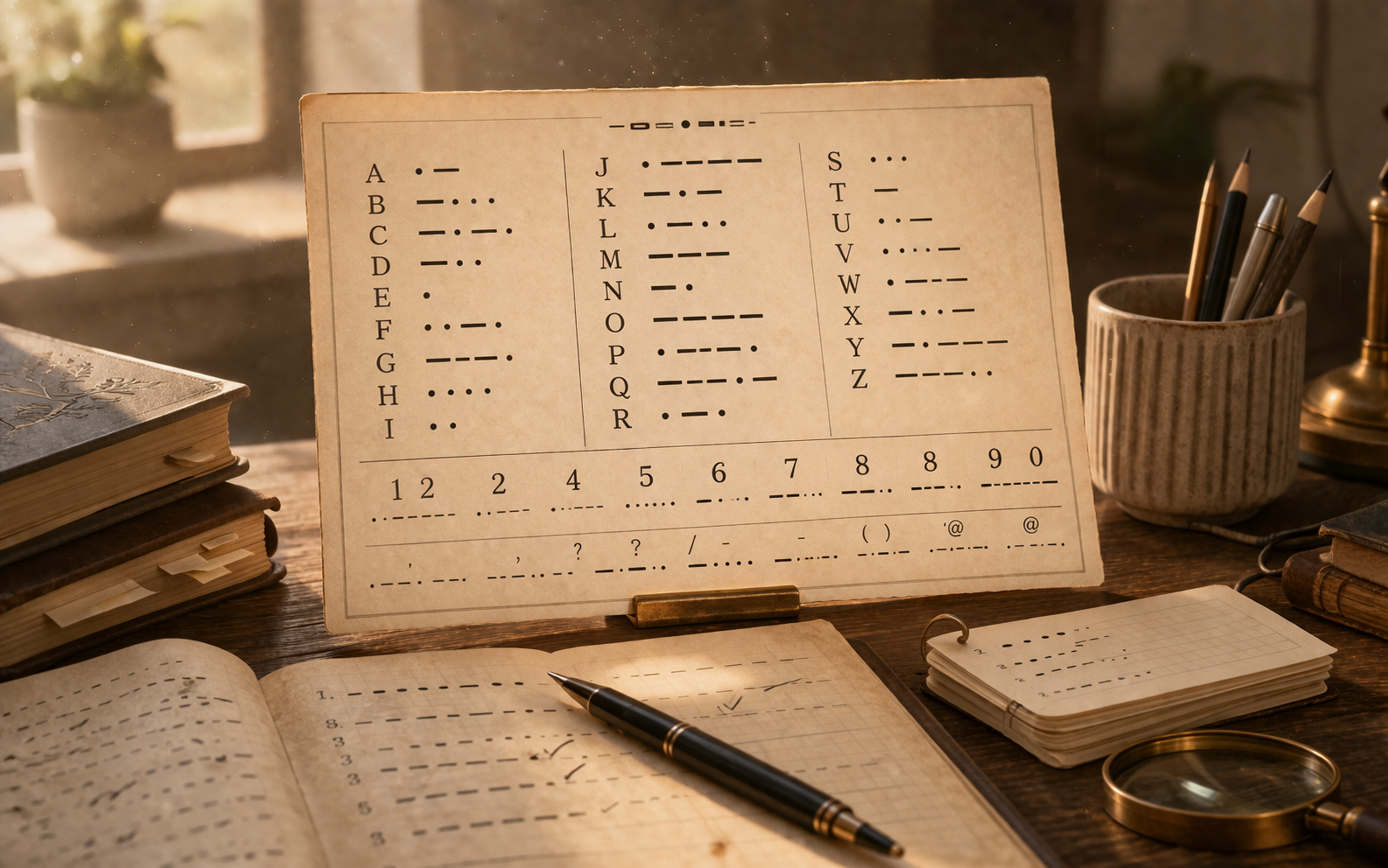
Morse Code Alphabet
Browse letters, numbers, and symbols to decode or build messages accurately.
Read Guide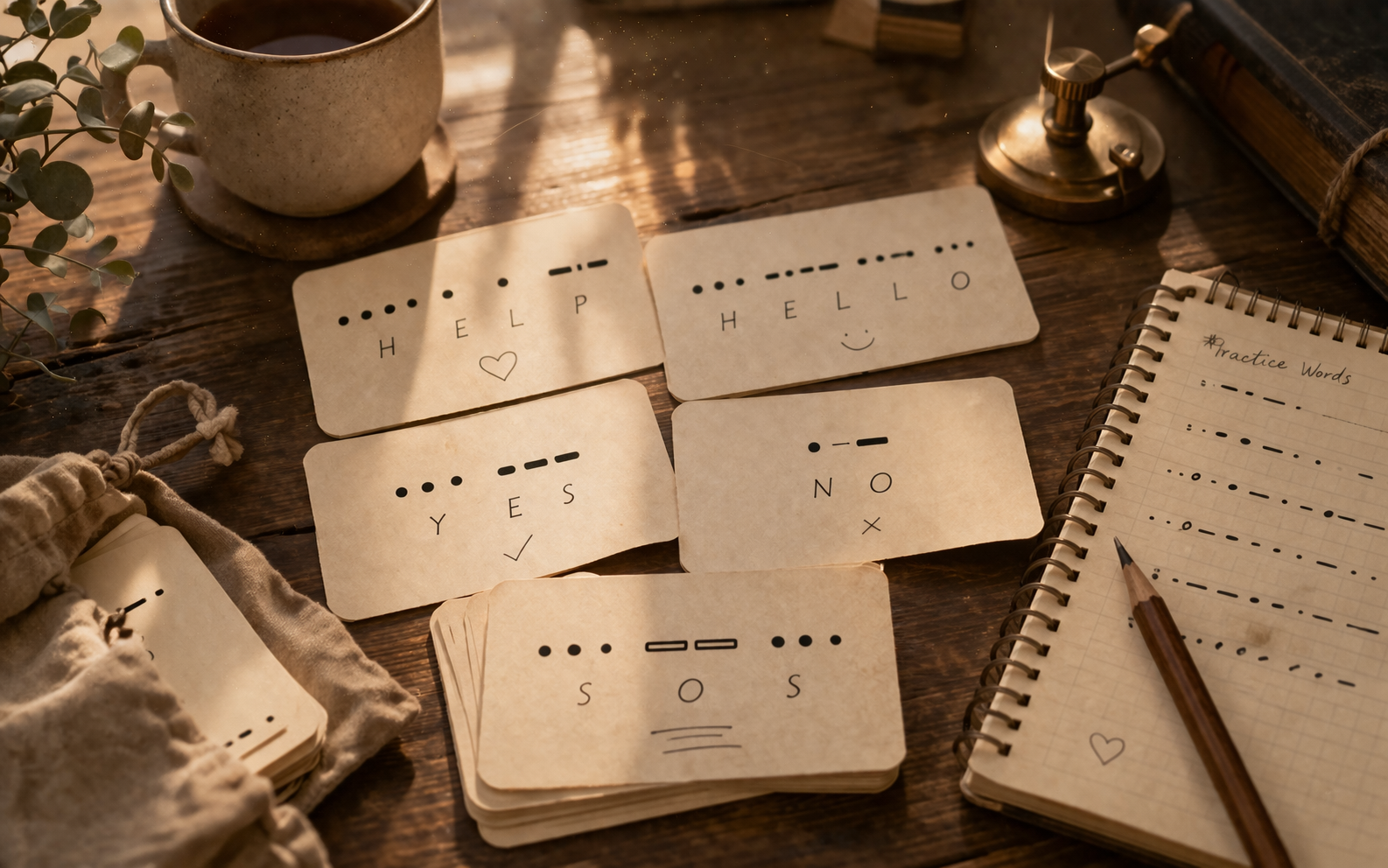
Words in Morse Code
Copy common words like HELP, HELLO, YES, and NO with clear spacing.
Read Guide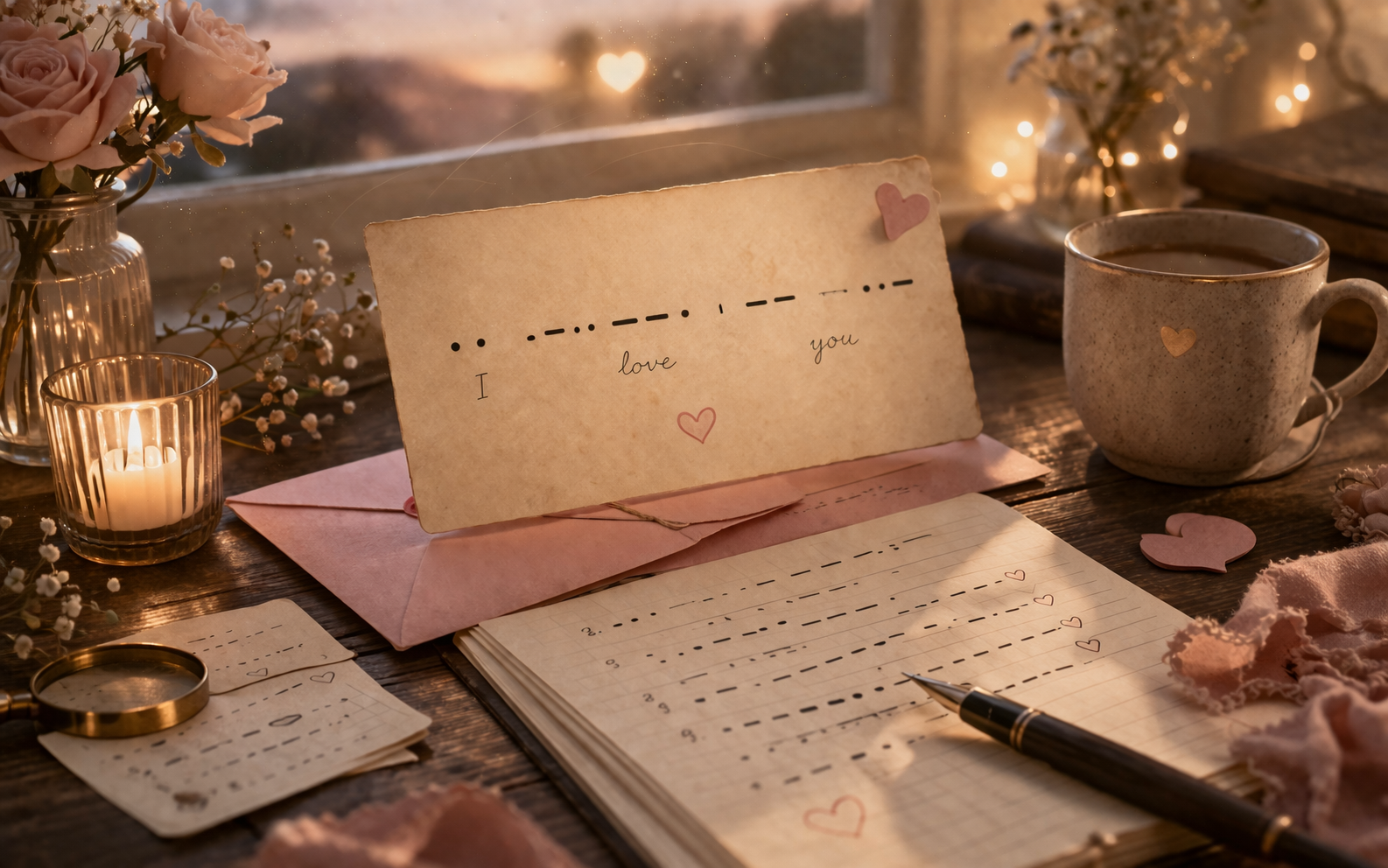
I Love You in Morse Code
Learn the Morse code version of this popular phrase and copy the pattern easily.
Read GuideReady to translate your own message?
Use the full Morse Code Generator for instant conversion, playback controls, and downloadable output.