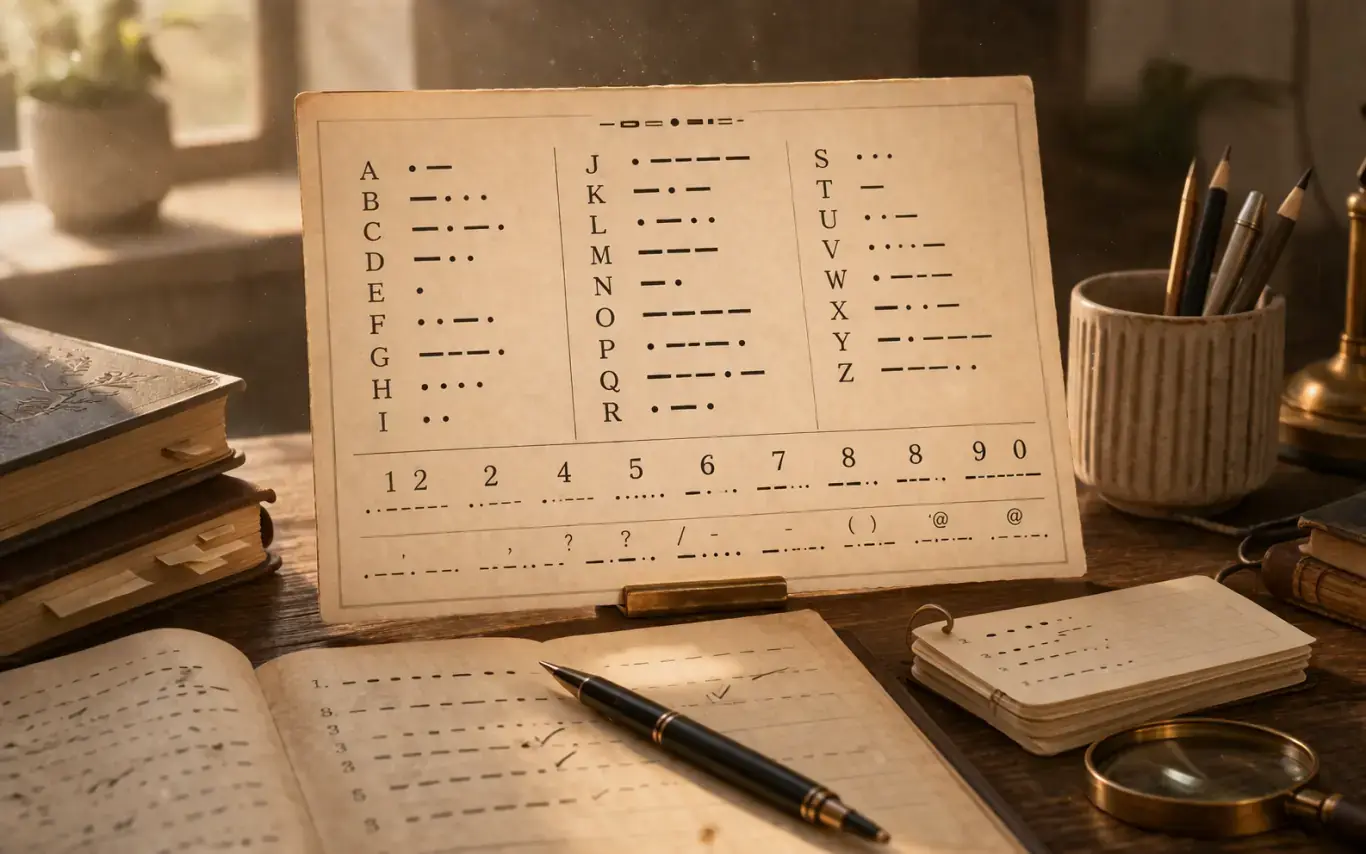
Learn Morse Code
Learn Morse code and how to read Morse code by sound. Start with timing rules, Farnsworth spacing, and a daily practice plan you can follow in 10-15 minutes.
Start in 3 Steps
Jump to the exact section you need: timing first, then sound recognition, then your daily practice routine.
1 Timing Rules
Jump to #timing-rules
2 Sound Training
Jump to #learn-by-sound
3 Daily Plan
Jump to #daily-practice
Quick Listen
.-.. . .- .-. -. / -- --- .-. ... .
How Morse Code Works
Morse code uses short and long signals. The character pattern matters, but spacing is what keeps decoding accurate. Most beginner errors happen when letter and word boundaries are unclear.
Dot = 1 unit
Dash = 3 units
Letter gap = 3 units
Word gap = 7 units
The spacing rules that prevent decoding mistakes
- A dash equals three dot units.
- The gap inside one letter is one unit.
- The gap between letters is three units.
- The gap between words is seven units.
- For typed Morse, use spaces between letters and / between words.
How to Read Morse Code
Start slow, train by grouped patterns, and read by sound instead of counting symbols.
Read flow: from slow to fast
Step 1
Start with a small character set and focus on accuracy.
Step 2
Practice grouped patterns such as E/T and S/O.
Step 3
Move to short words before faster phrase drills.
Grouped practice board
Why Farnsworth spacing helps beginners
Farnsworth spacing keeps character speed clear while adding extra space between characters and words, helping beginners process sound patterns without rushing.
How to Learn Faster
Use mnemonics, repeatable drills, and a short daily routine to improve recognition speed with less fatigue.
Mnemonics
Use memory anchors for commonly confused characters.
Drills
Repeat short sets with strict spacing discipline.
Daily routine
Keep practice short and consistent every day.
Daily practice plan (10-15 minutes)
Minute 1-3: Warm-up listening
Listen to 10 to 20 random characters and identify letters by sound, not by writing dots and dashes.
Minute 4-8: Short decode sets
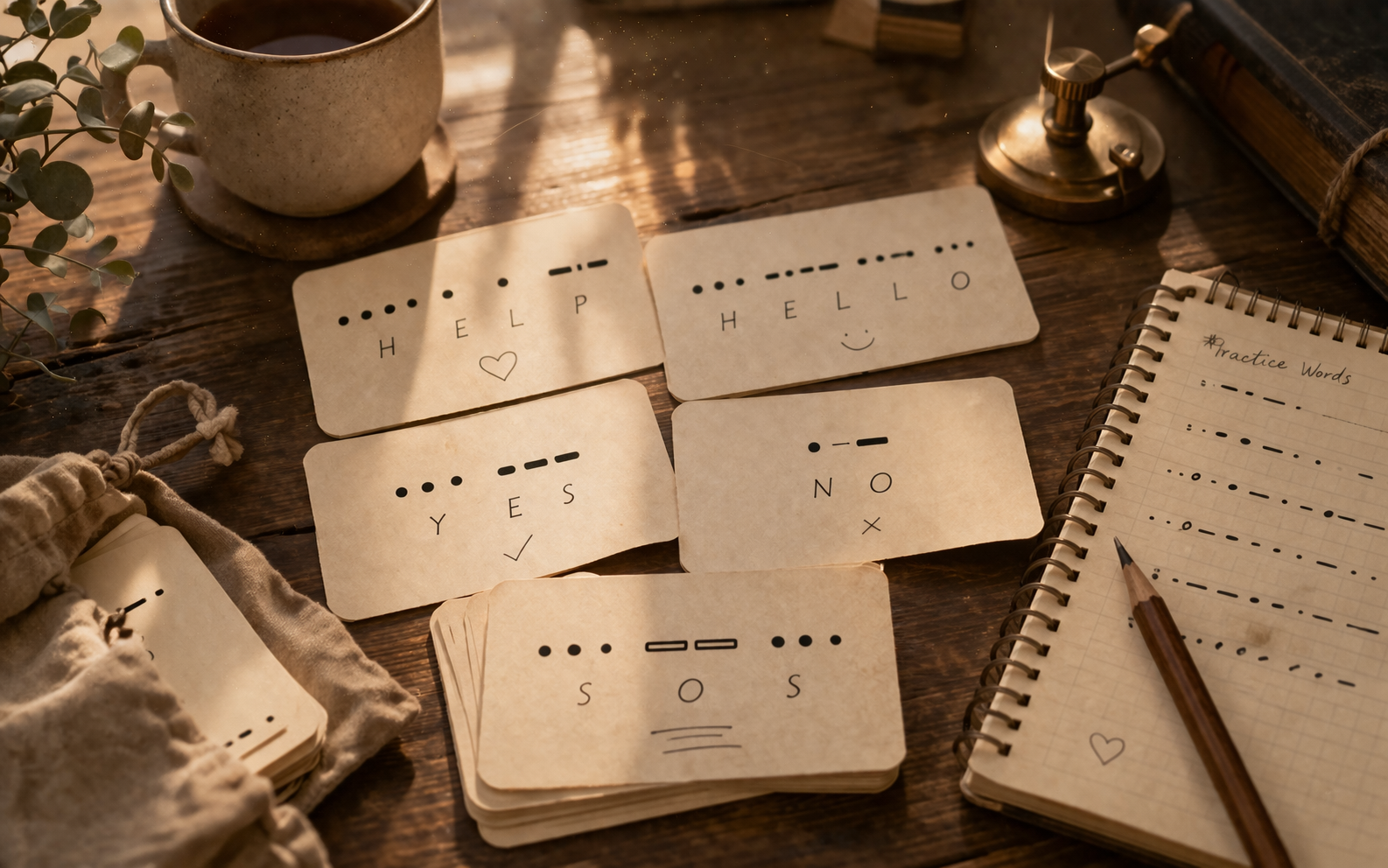
Start with common letters like E, T, S, O, then decode short words such as HELLO using clean spacing.
Minute 9-12: Encode and send
Pick one word, convert it, and send it by tapping, keying, or flashlight while keeping spacing stable.
Minute 13-15: Review
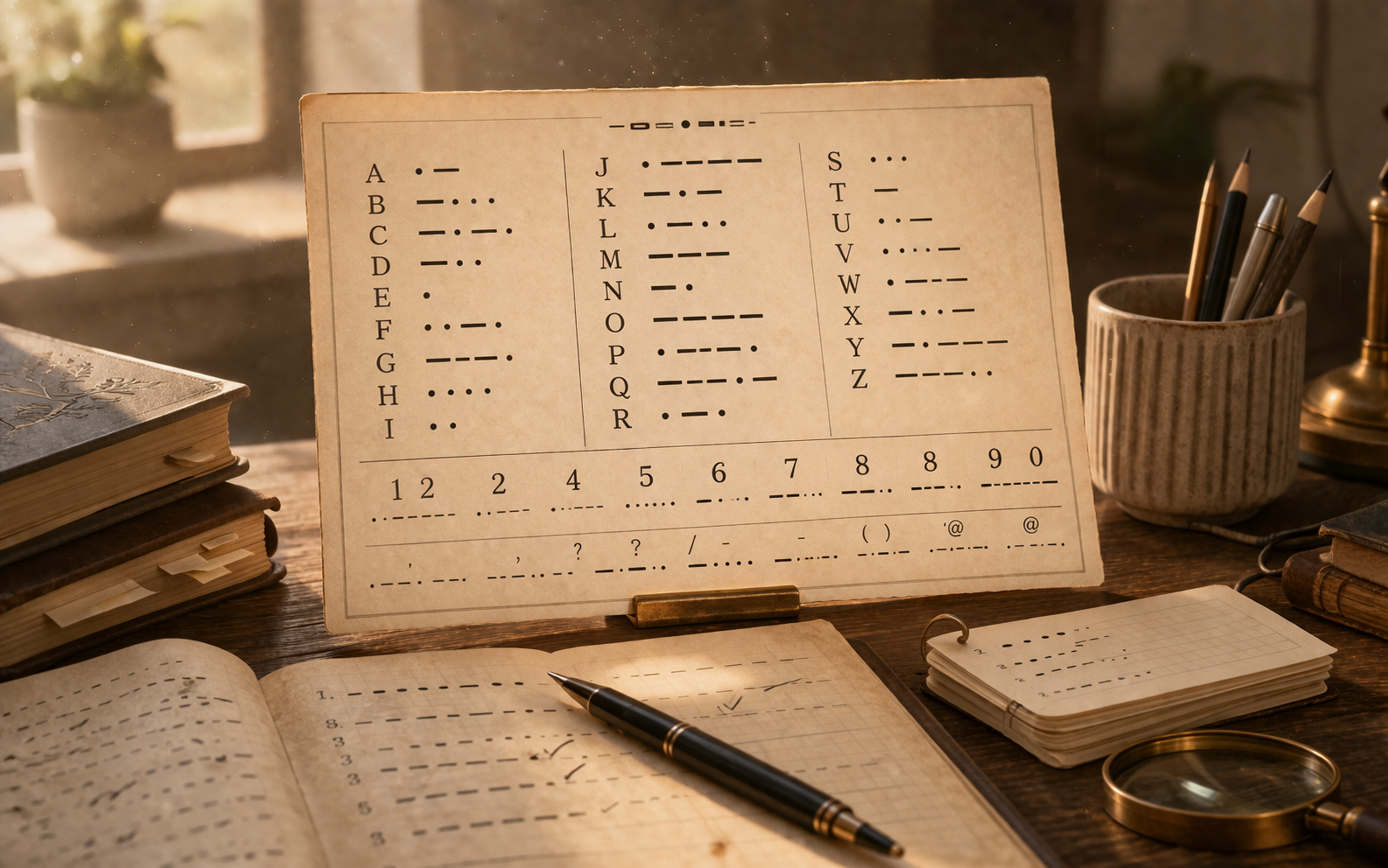
Check two or three hard letters on the alphabet chart, then stop before fatigue lowers accuracy.
Week-by-week milestones
Week 1
Recognize a small character set by sound.
Week 2
Decode short words using spacing cues.
Week 3
Decode short phrases with stable rhythm.
Week 4
Reduce extra spacing while keeping accuracy.
History of Morse Code
This section answers who invented Morse code and when it became a practical long-distance telegraph system.
Who invented Morse code?
Modern Morse development is associated with Samuel F. B. Morse, with major technical contributions from Alfred Vail during the telegraph era.
When was Morse code first demonstrated?
A key public milestone was the 1844 Washington-to-Baltimore telegraph demonstration, often cited as the practical start of Morse telegraph communication in the United States.
Timeline
1830s
Early development
1844
Public telegraph demo
Later era
International standard
1830s: early development work.
1844: public telegraph demonstration.
Later era: International Morse became the global standard.
Practice
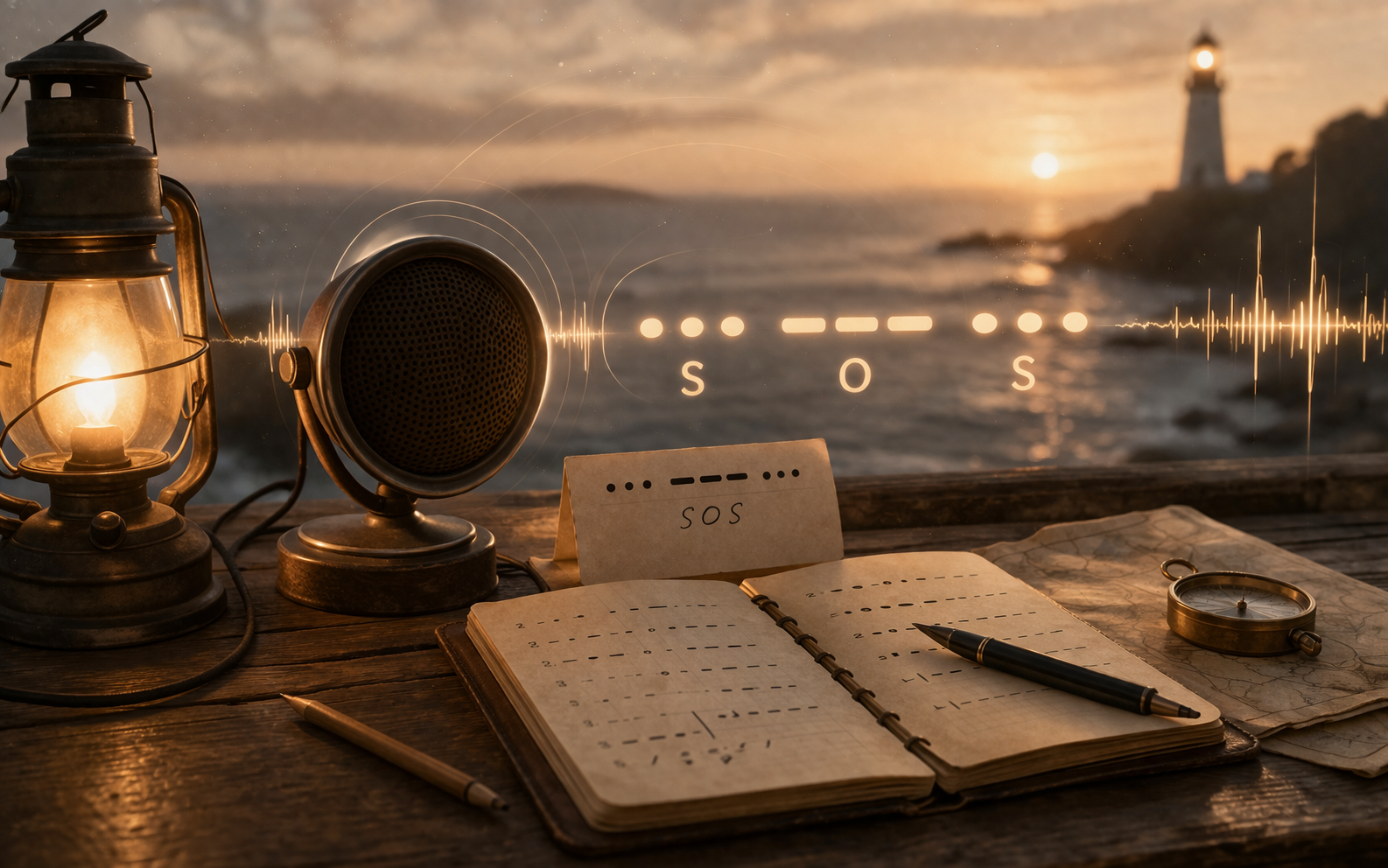
Practice with tapping, keying, or flashlight drills, then move to full-message conversion in the translator.
Practice loop
Listen
Decode
Send
Verify
- Tap on a desk with clear short and long pulses.
- Use a key or button if available.
- Practice simple light signaling with a phone flashlight.
Continue practice with the Morse Code Translator and cross-check difficult characters in the Morse Code Alphabet.
Training and standards sources
Safety note: avoid intense strobe-like flashing near drivers, aircraft, or people sensitive to flashing light.
Practice a custom message
Type plain text or Morse code, preview the output, and then continue in the full translator.
Learn Morse Code FAQ
Start with short daily listening practice and learn characters as rhythm patterns instead of counting dots and dashes.
Explore More Morse Code Guides
Continue with phrase practice and symbol references to reinforce what you learned.
Ready to translate your own message?
Use the full Morse Code Generator for instant conversion, playback controls, and downloadable output.